
Prevention, strength, mobility and recovery for the sport you do not want to give up.
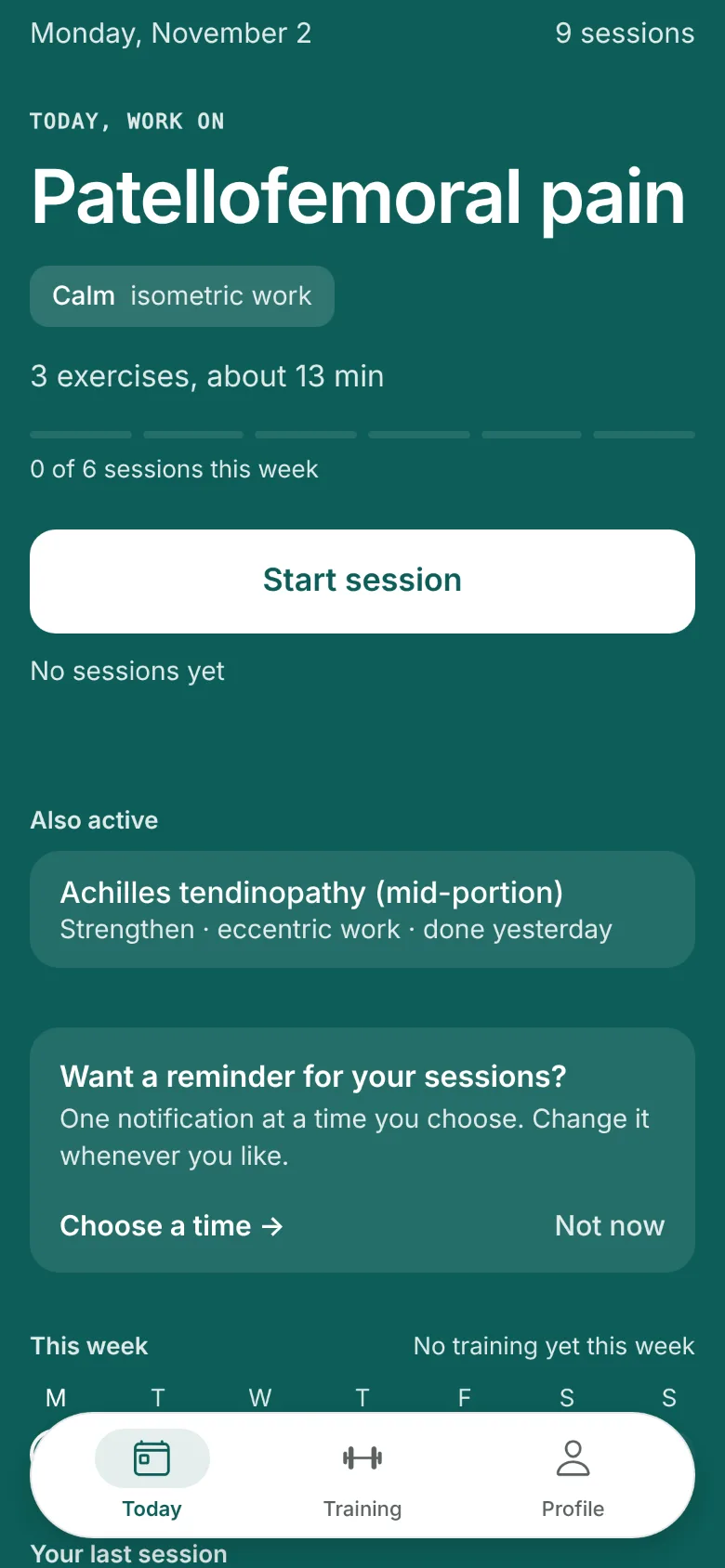
Spadework organises the work that keeps you going: prevention on the tissues that take the most, strength, mobility, and — if you already have a declared injury — a recovery plan that adjusts to the pain you report.
Spadework is a training and prevention tool. It is not a medical device and it does not diagnose, treat, cure or prevent any medical condition. If something does not fit, it will tell you to see a professional instead of trying to replace one.
You pick what is due, you train, you say how it went.
You pick what you have
From a list of 17 conditions across 6 zones. You choose what you already know or suspect: the app infers nothing and never tells you what you have.
You do the session
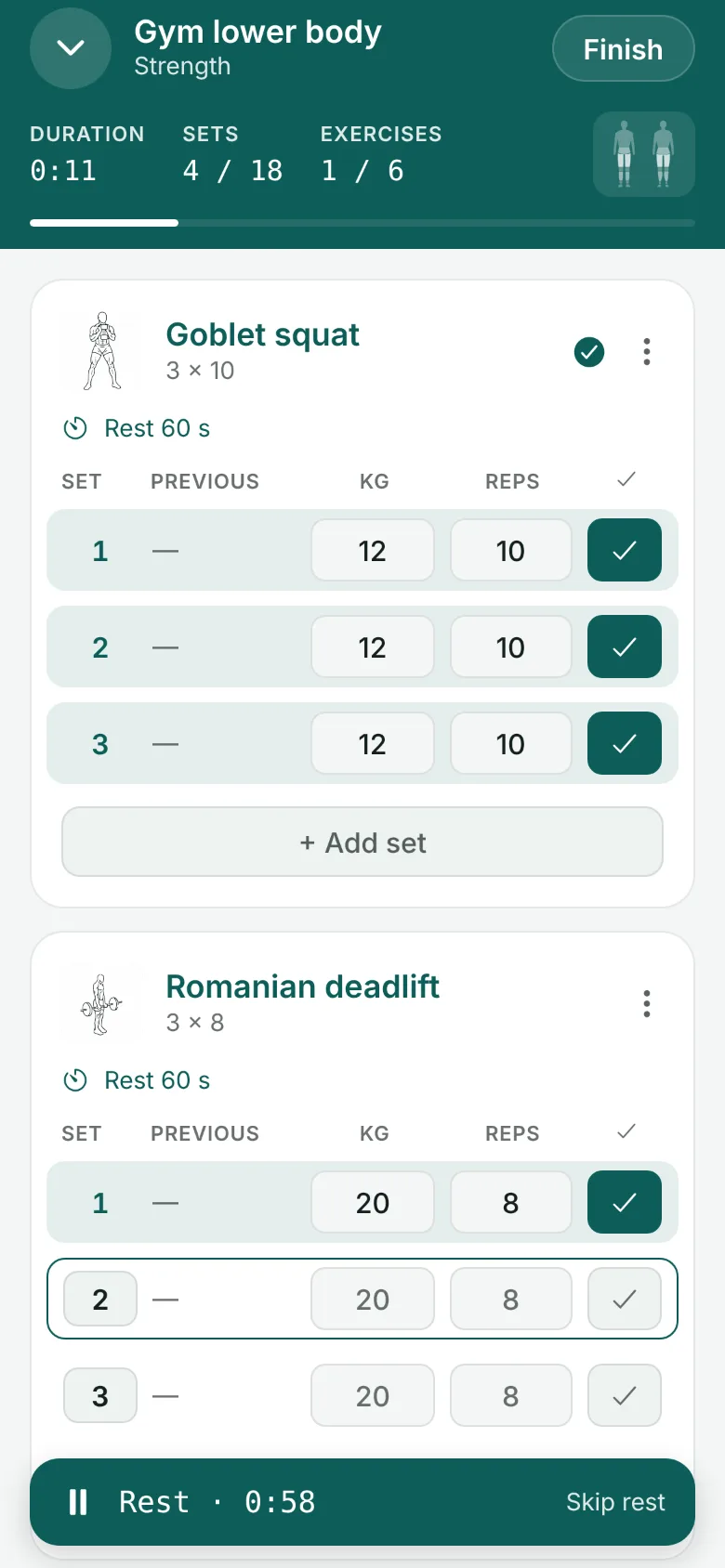
Every exercise with its sets, and what you did last time beside them. One tap logs a set and the rest starts on its own; you start the timer for holds yourself.
You say how it went
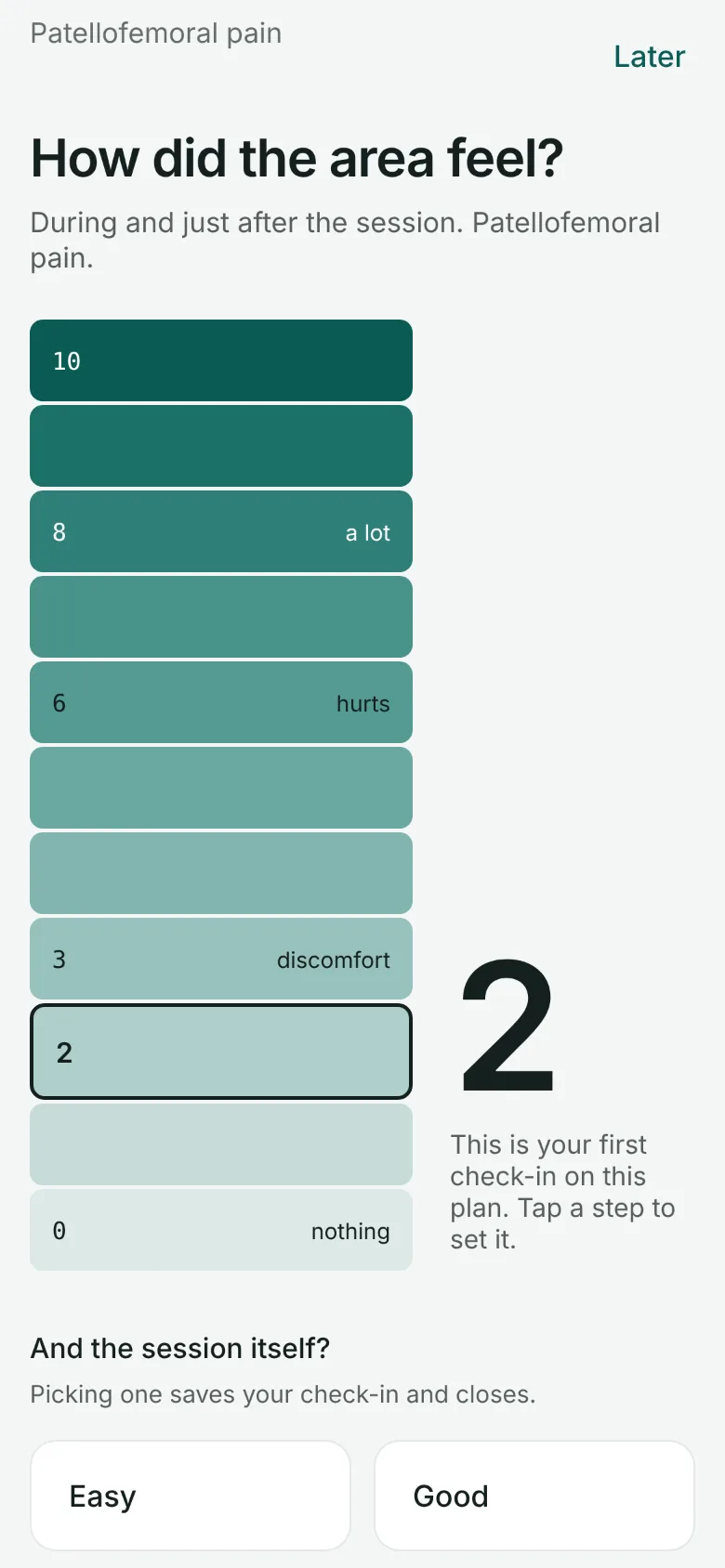
Mark the pain on one scale. In a recovery plan, that number holds it, raises it, or takes it back a phase.
One session, start to finish.


The session
Every set in view and editable. One tap logs each one, and the rest counts down in a bar that covers nothing.
The check-in
When you finish, two taps: how much pain you felt, on a 0 to 10 scale, and how the session felt.
What it keeps
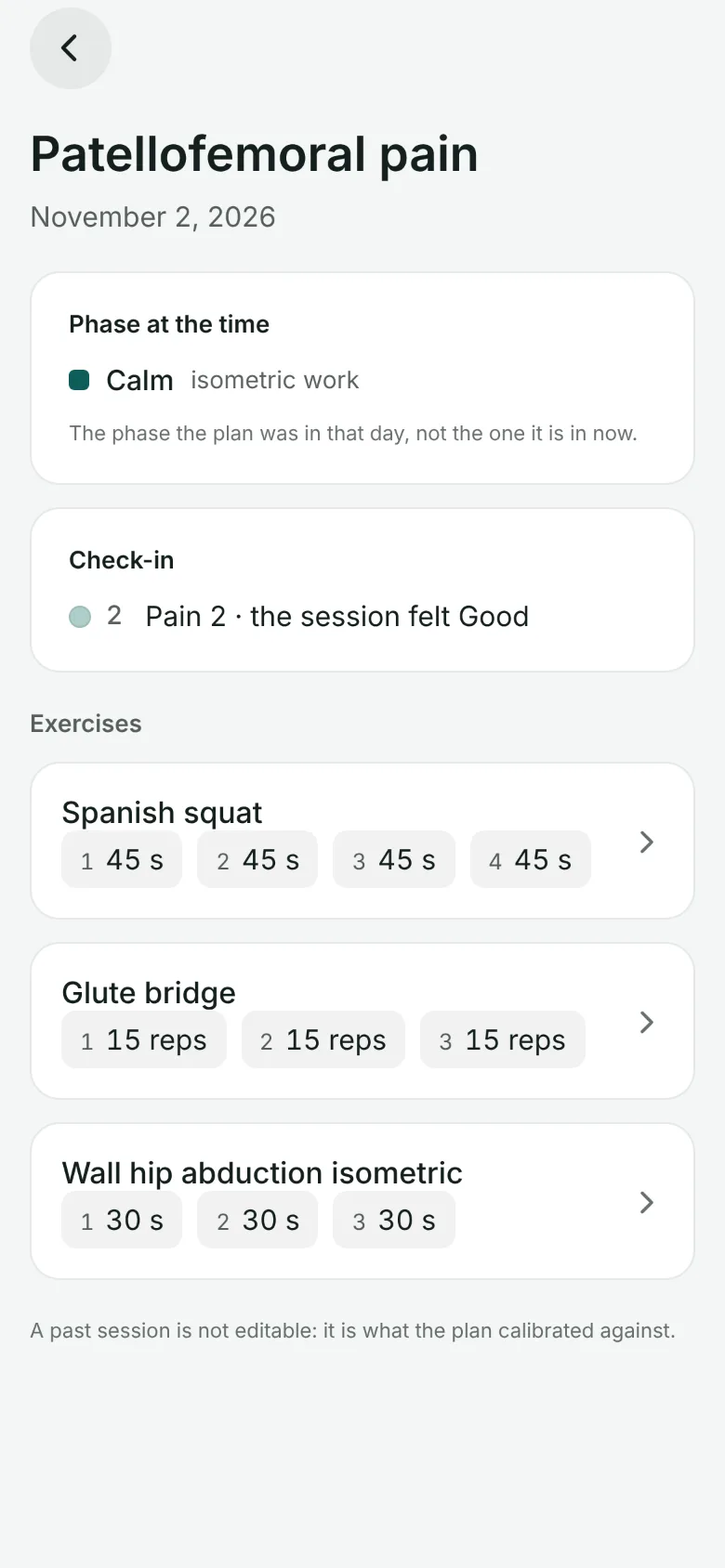
Every session is kept with that day’s phase, your check-in and every set you did.
Screenshots of the app with a demo account.
See the app screen by screenEvery movement, drawn as a loop.
Most exercises in the catalogue already have their animated drawing: a few positions, all in the same line. The ones in the recovery plans are being drawn now; until then, each comes with its steps written out.


Drawings from Workout Guide by Bryl Lim, licensed CC BY-SA 4.0, modified by Spadework. Credits and changes
Four training types. Only one has an engine.
Recovery
One plan per declared injury. Phases advance, hold or step back according to your check-ins. Closing a programme is something you confirm, not us.
Prevention
Work on the tissues that take the most, with no injury declared.
Strength
Load, reps and rest are yours to adjust in the moment.
Mobility
Mobility and range of motion, before or after training.
Prevention, strength and mobility have no automatic progression, and that is a decision. The engine is calibrated on injured tissue: pointing it at a strength session would read "no pain, add load" as a prescription.
Calm, strengthen, return to running.
These are the phases of a recovery plan, and they are tasks, not levels. Moving between them is a change of work, so going back costs nothing but time — which is exactly the moment most people push through and make it worse.
This number only goes up.
We count completed sessions and nothing else. A live streak pushes people to train in pain, and a broken one punishes the week they were already struggling. Rest days are part of the plan, not a gap in it.
Things an app should not handle
If your answers match a pattern that needs a professional, the plan stops and refers you. That is the only place in the product where you see red. No condition is published until a physiotherapist has reviewed its plan.
The waitlist is open.
We write to you about Spadework: updates, the launch and benefits for the list. No tracking, your email goes to nobody else, and every email has an unsubscribe link.